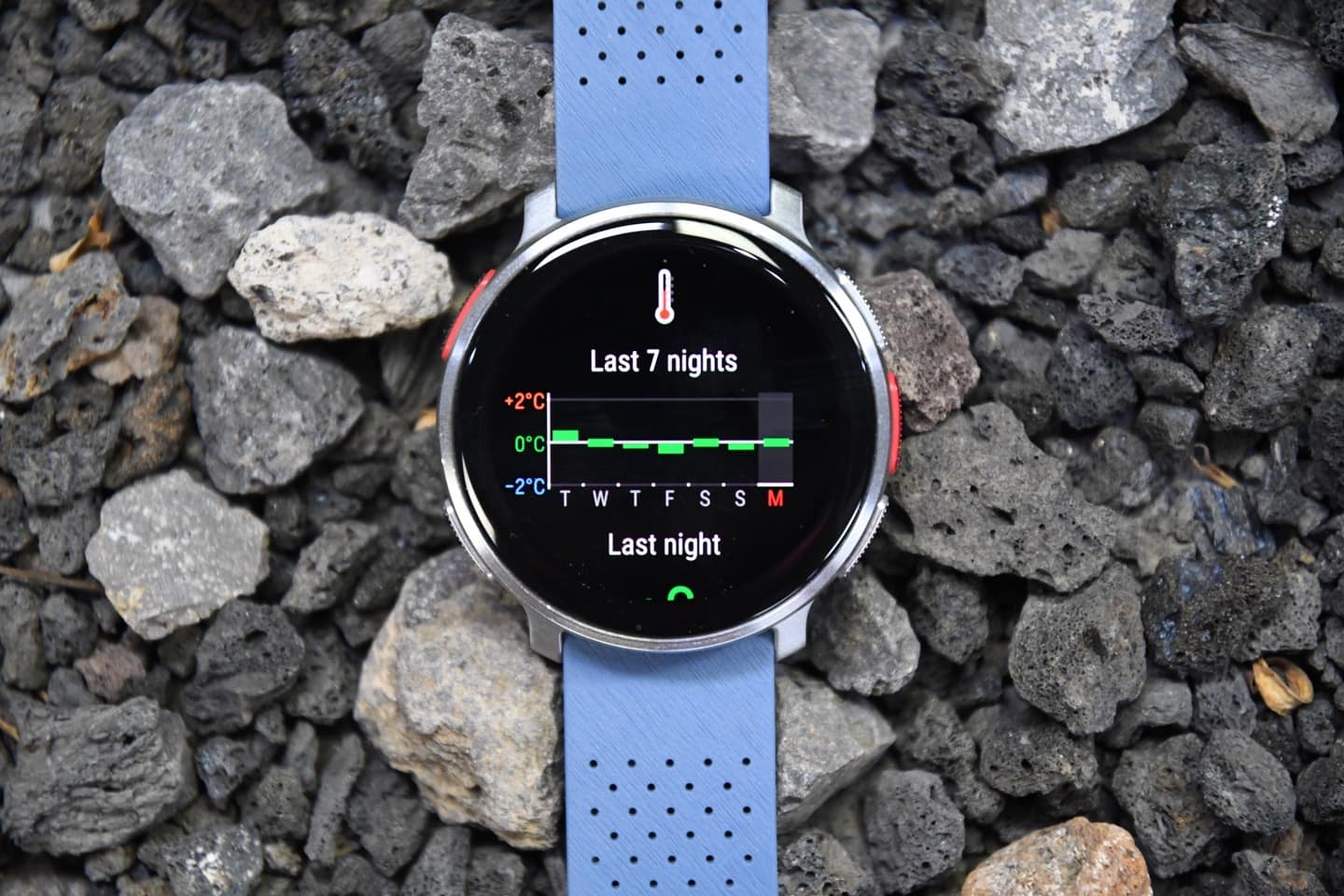
A watch can count miles and still miss the point. The Polar Vantage V3 is built for people who care less about a shiny wrist screen and more about whether today’s workout helps or hurts tomorrow’s session. Polar announced the watch in October 2023 as its premium multisport model, with Polar Elixir biosensing, an AMOLED display, dual-frequency GPS, offline maps, and expanded recovery tools. That matters for U.S. runners, cyclists, triathletes, and gym-focused athletes who train around work, family, weather, and recovery windows. A better fitness tracking watch should not push you harder every day. It should tell you when the smart move is backing off. That is also why serious gear coverage from performance-focused product updates has become useful for buyers who want more than launch hype. The appeal here is not one magic number. It is the way the watch links training stress, sleep, recovery, route data, and daily readiness into a cleaner decision: go hard, go easy, or go home.
Why Polar Vantage V3 Puts Load Before Hype
Most sports watches sell speed first. Faster chip. Brighter screen. Louder launch claim. This one is more interesting because its best idea is quieter: it treats training as strain that needs context. Polar’s Training Load Pro gives a Cardio Load score, lets you rate Perceived Load, and can also account for Muscle Load, which helps explain how a session hit your body beyond pace and heart rate.
That makes the watch feel less like a scoreboard and more like a coach who notices patterns. A hard hill workout in Denver and a flat tempo run in Dallas may produce similar average heart rates, but they do not always create the same fatigue. Heat, elevation, sleep, soreness, and terrain change the cost.
What the training load feature actually reads
The training load feature is strongest when you stop treating it as a single verdict. The useful part is the split between what your heart handled, what your muscles absorbed, and how hard the session felt. That last piece matters. A watch can measure plenty, but it cannot feel your legs on mile eight.
Take a recreational marathoner in Chicago. Tuesday’s intervals look clean on paper: five repeats, steady pace, no GPS dropouts. But the athlete slept badly after a late shift and entered the session tight. The same workout that looks “productive” in a simple log may carry more cost than expected. That is where perceived effort keeps the data honest.
The non-obvious part is that subjective input can make the system more useful, not less. Many athletes distrust anything they have to enter by hand. Yet a one-tap effort rating can catch stress that wrist sensors miss, especially when life fatigue shows up before pace falls apart.
Why load beats motivation on bad days
Motivation is loud at 6 a.m. Then the body gets a vote. A strong GPS running watch should help you respect that vote without turning every tired morning into an excuse.
This is where the V3 fits a common American training problem: people stack hard sessions because they only see calendar boxes. Monday strength. Tuesday run. Wednesday spin. Thursday speed. By Friday, they are not training anymore. They are collecting fatigue.
The better move is not always doing less. Sometimes it is moving the hard day. A runner in Phoenix might shift intervals from an afternoon heat window to an early morning slot. A cyclist in Seattle might keep the ride but cut the climbs. Load data does not remove judgment. It gives judgment a floor.
Accuracy Is Bigger Than GPS Lines on a Map
Accuracy sounds simple until you use a watch in the real world. Tree cover, city blocks, sweat, loose straps, cold wrists, and stop-start workouts all make clean data harder. The V3 answers part of that with dual-frequency GPS and offline maps, two features Polar highlighted for better location tracking and phone-free navigation.
Independent testing has been more measured than the marketing. DC Rainmaker found the V3’s dual-frequency GPS improved over Polar’s earlier multiband effort and ranged from fine to strong, though dense city conditions could still create trouble. That is a fair read. No watch becomes perfect because the spec sheet says “dual-frequency.”
Dual-frequency GPS helps most where routes get messy
Dual-frequency GPS is not there to make your neighborhood jog look fancy. It earns its place when signals bounce, trails twist, or buildings crowd the sky. A downtown Boston run, a wooded Atlanta trail, and a canyon-side hike in Utah can all expose weak tracking.
For many buyers, the map line is less about pride and more about pacing. If your watch thinks you ran 6.4 miles when the route was 6.0, your pace, training load, and race prediction all get nudged in the wrong direction. Small errors can feed bigger mistakes.
That does not mean every casual runner needs premium GPS. A three-mile loop in open suburbs will not punish a cheaper model the same way. The counterintuitive insight: better GPS matters most when you are not staring at the map. It quietly protects the other numbers.
Wrist heart rate is useful, but not magic
The V3 uses Polar’s newer biosensing setup, and reviewers have praised parts of the experience. Road.cc reported strong GPS and heart-rate performance during cycling comparisons, while still warning that battery life may concern athletes with heavy weekly volume. That kind of mixed verdict is more useful than a clean cheer.
Wrist heart rate has limits. Grip strength, cold weather, tattoos, skin movement, and interval intensity can all hurt readings. For steady runs and daily tracking, wrist data is often enough. For short repeats, racing, or power-based cycling work, a chest strap can still be the smarter tool.
That does not weaken the watch. It clarifies its role. Use the wrist sensor for convenience. Add a strap when precision changes the workout. Serious athletes already think this way, even when brands prefer simpler promises.
Battery, Maps, and Recovery Make It a Daily Tool
A training watch fails when it becomes another device you have to babysit. The V3 tries to avoid that with long training modes, offline maps, and sleep-based recovery features. Polar’s technical support lists up to 43 hours in performance training mode with optical heart rate and dual-frequency GPS, and up to 140 hours in an eco mode using single-frequency GPS with a lower recording rate.
That range matters because American athletes do not all train the same way. A New York runner may want bright screen visibility and accurate city tracking. A Colorado hiker may care more about route confidence and battery margin. A Florida triathlete may care about heat, recovery, and whether the watch can survive a long weekend block.
Offline maps change how you train away from home
Offline maps sound like an adventure feature, but they help ordinary travel too. A runner landing in Austin for a work trip can load a route, leave the phone in the hotel, and avoid guessing through unfamiliar streets. Polar says the watch comes with Europe and North America maps preloaded by default, with other regions available through Polar Flow.
The map experience is not the same as a phone. You still need to plan, and rerouting can be limited compared with full navigation apps. Yet wrist-based context is enough for many runs and rides. You need to know whether to turn, whether you drifted, and how to get back.
The quiet win is confidence. When you feel safe on a route, you train better. You stop cutting sessions short because a road looks uncertain or a trail split feels wrong.
Recovery data matters after the workout ends
Polar’s own manual points to sleep stage tracking, Nightly Recharge, and Sleepwise as tools that help show overnight recovery and expected energy across the day. That is where the fitness tracking watch side becomes more than step counting.
A hard Saturday ride does not end when you upload it. It continues into dinner, sleep, hydration, Sunday soreness, and Monday’s plan. Recovery tools help connect those pieces. They also make training feel less random.
The surprise is that recovery data can make you more consistent by making you less stubborn. Many athletes think discipline means never adjusting. In practice, the disciplined athlete changes the plan before a small warning becomes a forced break.
For broader health context, the CDC adult activity guidance recommends 150 minutes of moderate weekly activity or 75 minutes of vigorous activity, plus muscle-strengthening work on two days. A watch cannot do that work for you. It can help you spread the stress in a way you can repeat.
Who Should Buy This Watch and Who Should Skip It
The V3 is not for everyone, and that is a good thing. A watch built for structured training should not pretend to be the cheapest daily smartwatch. Polar’s U.S. Vantage series page has listed the model as a premium multisport watch at $699.99, which puts it in serious-buyer territory.
That price makes the decision sharper. You are not buying a nicer clock. You are buying a training system. The better question is whether you will use the system enough to make the cost sensible.
Best fit for runners, cyclists, and multisport athletes
This watch makes the most sense for athletes who already ask better questions. How much did that session cost? Am I adapting or piling on stress? Is this route safe without my phone? Do my easy days stay easy?
A half-marathon runner building from 25 to 40 miles per week could use the load tools to avoid turning every longer run into a hidden race. A cyclist mixing indoor power work with outdoor weekend rides could use heart-rate and recovery trends to avoid stale legs. A triathlete could value one platform for swim, bike, run, and sleep.
For those readers, a running watch comparison guide and a heart rate training zones explained page would be natural next steps before buying. The V3 sits in the category where features only matter if they change weekly choices.
Skip it if you want a phone on your wrist
Some buyers want rich apps, music streaming, messaging, and broad smartwatch polish. They may be happier elsewhere. Men’s Fitness praised the bright AMOLED display and multiband GPS in a 2025 review, but also listed issues such as buggy phone pairing and no Spotify or Deezer playback.
That tradeoff is worth saying plainly. Polar is strongest when the conversation is training. It is weaker when the conversation is lifestyle apps.
The non-obvious buying advice is this: do not buy the watch because you hope it will make you an athlete. Buy it because you already train enough to need better feedback. The device can guide effort, but it cannot create intent. That part is still yours.
Conclusion
The best sports watches do not flatter you. They interrupt you when your plan and your body stop agreeing. That is why the V3 remains interesting beyond its launch cycle. It brings together load, recovery, GPS, mapping, and daily tracking in a way that rewards patient athletes more than gadget collectors.
The Polar Vantage V3 is strongest for runners, cyclists, and multisport users who want training choices backed by more than mood. It is not the slickest smartwatch for apps, music, or casual wrist browsing. That is fine. Its purpose is narrower and more serious.
For U.S. buyers, the smart move is to match the watch to your actual week. If you train with structure, travel with routes, care about recovery, and want a GPS running watch that keeps effort in context, it belongs on your shortlist. Buy the tool that helps you repeat good training, not the one that only looks good on day one.
Frequently Asked Questions
Is the Polar Vantage V3 good for marathon training?
Yes, it suits marathon training well because it tracks GPS, heart rate, recovery, sleep, and training strain in one place. The biggest value appears during longer plans, where managing fatigue matters as much as hitting pace targets.
How accurate is the GPS on the Polar Vantage V3?
The dual-frequency GPS performs well in many outdoor settings, especially compared with older Polar models. Dense city blocks, heavy tree cover, and poor signal areas can still cause issues, so no buyer should expect flawless tracking everywhere.
Does the training load feature help beginners?
Yes, but beginners should keep it simple. Use it to notice when effort is rising too fast, not to chase every metric. The watch can help new athletes avoid stacking hard days before their body is ready.
Can the Polar Vantage V3 replace a coach?
No, it can support better choices, but it cannot replace a coach’s judgment. A coach reads goals, injury history, stress, and race timing. The watch gives useful signals, then you or your coach decide what to do.
Is the Polar Vantage V3 worth it for gym workouts?
It can be worth it for gym users who also run, ride, or track recovery. For lifting only, it may be more watch than needed. Its strongest value comes when strength work connects with endurance training and sleep patterns.
Does the Polar Vantage V3 work without a phone during workouts?
Yes, it can record workouts without carrying a phone, and offline maps help with route awareness. You still need phone or computer syncing for setup, deeper review, updates, and planning through Polar Flow.
What type of athlete benefits most from this GPS running watch?
The best fit is a consistent athlete who trains several days per week and wants feedback on fatigue, recovery, and route data. Casual walkers may enjoy it, but they may not use enough features to justify the price.
Should I use a chest strap with the Polar Vantage V3?
Use one for intervals, racing, cycling power sessions, or workouts where heart-rate precision matters. Wrist heart rate is convenient for daily use and steady efforts, but a chest strap can give cleaner data during harder sessions.