Power outages have stopped feeling like rare events for many American households. The Jackery Solar Generator now sits in that practical middle ground between a noisy gas unit and a small phone bank, especially with upgraded solar panels in the buying conversation. It is not meant to run your whole house like a standby system. It is meant to keep the right things alive: a fridge, phones, lights, a router, a CPAP machine, small tools, or an RV weekend that does not end when the battery gauge drops. The 2000 Pro class has long been known around a 2,160Wh battery and 2,200W AC output, while newer Jackery listings also push the 2000 Plus and 2000 v2 lines with different specs and bundle options. That makes the current shopping moment a little messy, but useful for careful buyers. Sites covering consumer product updates often treat these launches like simple deal news. The better question is whether the panel upgrade changes how the kit works on a driveway, campsite, porch, or job trailer.
Why Jackery Solar Generator Panels Change the Buying Math
A battery station gets attention because the box has the screen, handle, ports, and big number on the front. The panels decide whether that box becomes a daily tool or a one-time charge you hope lasts. That is why the upgraded solar panels matter. They shift the purchase away from “How much power is stored?” and toward “How fast can I put power back when the wall outlet is gone?”
The panel upgrade matters more than the battery headline
The old way to shop these kits was simple: find the biggest battery you could afford, then worry about charging later. That thinking falls apart during a two-day outage in Texas heat or a long RV stop in Arizona. A large battery is pleasant on day one. On day two, recovery speed starts to matter more.
A panel set with better output can shorten the dead zone between “we still have backup” and “we are rationing every plug.” Jackery has described the 2000 Pro around six SolarSaga 200W panels charging in under 2.5 hours in some regional listings, while other regional pages mention six 100W panels taking longer under ideal sun. Those numbers are lab-side goals, not a promise that your cloudy backyard will match them. Still, they show why solar input changes the class of the product.
The counterintuitive part is that the battery is not always the bottleneck. Space is. Six folding panels can eat up a patio, campsite, or driveway faster than buyers expect. If you live in a shaded street in New Jersey or park an RV under trees in Oregon, the “fast recharge” line on a product page may be less useful than two panels placed well for five steady hours.
A better panel package also changes how you think about partial days. You do not need a perfect blue-sky afternoon to gain value. Even a morning refill that brings the battery from anxious to usable can change dinner, medication storage, and phone access. That is the part spec sheets miss. People do not live in watt-hours. They live in small decisions during bad weather.
When a two-kilowatt unit fits real American routines
A portable power station in this size range makes the most sense when you map it to habits rather than fantasies. Think about a family in suburban Florida during hurricane season. They may care less about running the whole HVAC system and more about keeping insulin cold, phones charged, the cable modem alive, and a fan moving air in one bedroom.
That is a different promise. It is smaller, but more believable.
For campers, the same logic applies. A weekend in a travel trailer does not require every appliance to run at once. A fridge, LED lights, a coffee maker in the morning, and a few device charges can feel normal if you stagger loads. The unit works best when you treat it like a limited water tank, not an endless pipe.
This is where home backup power becomes a planning issue rather than a bragging contest. The families who get the most from these systems usually know their “must-run” list before the storm warning hits. They also know what they can skip. A hair dryer, space heater, or large microwave can drain confidence fast, even when the wattage chart says the inverter can handle the hit.
There is a social side too. In many neighborhoods, one prepared house becomes the charging stop for two or three families. That does not mean you should promise power to everyone on the block. It means your setup may carry more than your own phone. A few USB cables, a power strip with a sane rating, and a written rule about high-draw devices can prevent arguments when everyone is tired.
What the 2000 Pro Class Means for Homes, RVs, and Worksites
Once you get past the launch headline, the real question is fit. A 2kWh-class system sits in a useful but often misunderstood lane. It is far stronger than a small camping brick. It is not a full-home battery wall. Buyers who accept that middle position make better choices and complain less after the first outage.
Running essentials without pretending it replaces the grid
The 2000 Pro class is strong enough for many household and outdoor devices, but it still asks you to choose. Jackery’s own guidance for the 2000 Pro points to a 2,160Wh capacity and 2,200W output, which is enough to run many appliances under that output ceiling. Actual runtime depends on the device draw, cycling behavior, and how much reserve you want left at night.
A full-size refrigerator is a good example because it does not pull the same power all day. It cycles. That cycling helps a battery station stretch longer than a flat wattage estimate suggests. A coffee maker is the opposite. It may run for a short time, but it hits hard while it is on. The buyer who understands those patterns will get more value than the buyer who reads one capacity number and stops there.
On a small worksite, the same unit can run chargers, lights, a laptop, a fan, or short bursts from tools within its output range. The trick is not treating it like a jobsite generator that can take abuse all day. It is cleaner, quieter, and easier to move, but it still needs load discipline.
Picture a flooring installer finishing trim in a house where the breaker panel is off for other work. A station in this class can keep task lights, battery chargers, and a radio going without filling the room with fumes or dragging a cord through a window. That is not flashy. It is useful. The value is often in avoiding friction, not in running the largest appliance you own.
The honest math behind fridge, CPAP, and coffee loads
Here is the simple way to think about it. A battery rated around 2,160Wh does not give every watt-hour to your appliance. Inverter losses, standby use, temperature, and device behavior shave off real capacity. That does not make the unit weak. It makes planning honest.
A CPAP machine, phone charger, LED lamp, and small fan are gentle loads compared with a toaster oven or space heater. That is why a 2kWh power station can feel huge in one house and small in another. The difference is not the product. It is the load list.
For a clearer buyer path, use a three-bucket plan:
- Must-run: fridge, medical device, phone, router, basic light.
- Nice-to-run: fan, laptop, TV, small coffee setup.
- Skip during outage: heater, hair dryer, large cooking appliance, anything that turns stored power into heat fast.
That last bucket is where many people lose. Heating coils are battery bullies. They take a system that felt generous and make it feel small within minutes. A better setup uses the portable power station for control, communication, food safety, and comfort. Cooking can move to propane, a grill, or another safe outdoor method when conditions allow.
The coffee example sounds minor until you have lived through a cold morning with no power and a house full of restless people. A short brew cycle may be worth it. A second round, a toaster, and a hot plate may not. Good backup living is not joyless rationing. It is choosing the comfort that gives back more than it costs.
How the Solar Setup Should Be Judged Before You Buy
Panel upgrades sound clean on a product page, but solar charging is where real life gets loud. Sun angle changes. Clouds pass. A neighbor’s tree cuts output at 3 p.m. Your driveway points the wrong way. The kit still works, but only if you judge it like outdoor gear rather than a magic refill button.
Six-panel charging looks fast only when space cooperates
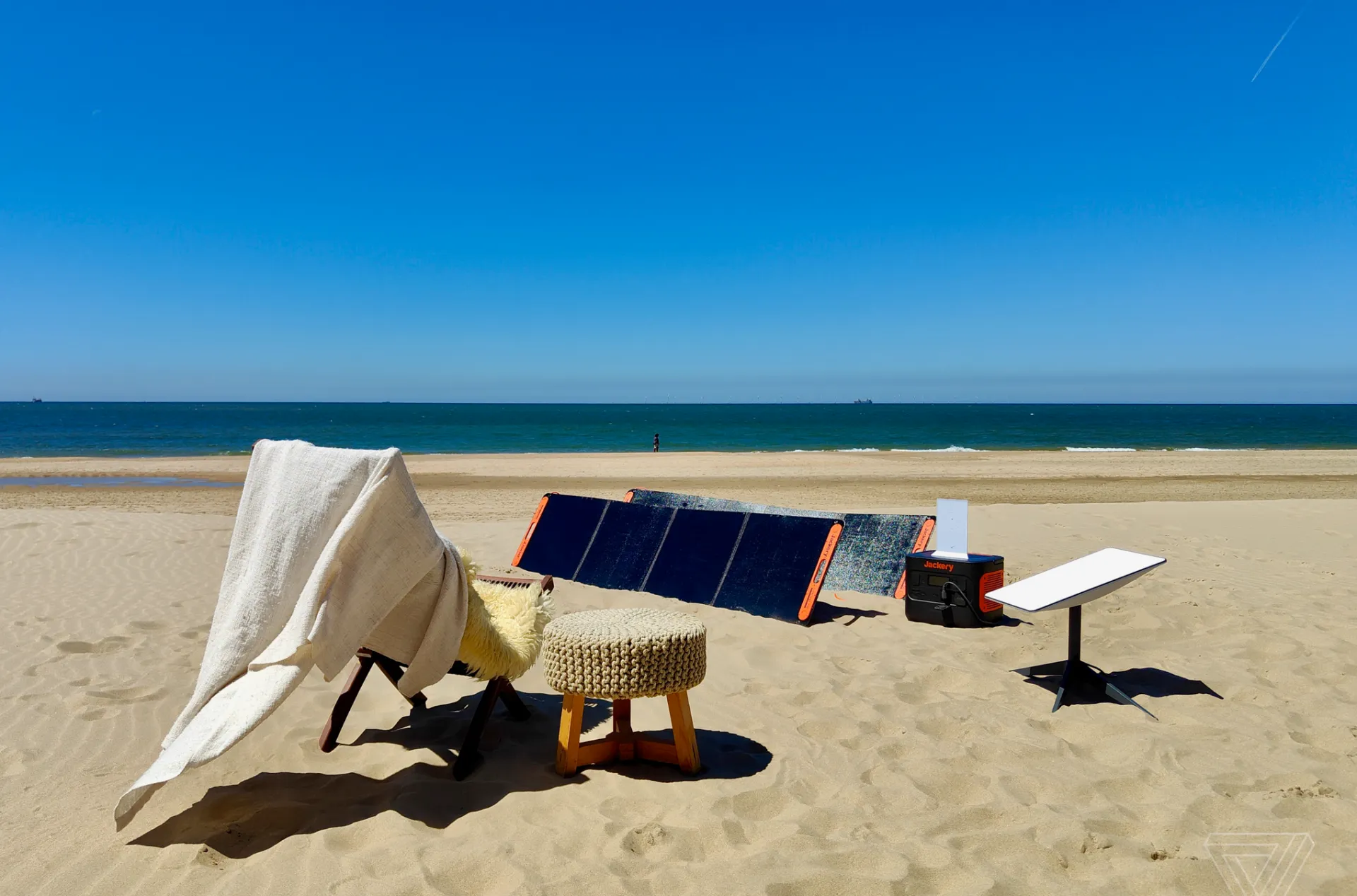
A six-panel setup can look impressive in a photo. In a normal American yard, it can feel like a small campsite has landed beside the garage. Each panel needs sun, spacing, and a safe cable path. Put them too close to foot traffic and someone will kick a stand. Lay them near a car and shadows will move across them.
This is the hidden cost of faster charging. You are not paying only with dollars. You are paying with setup space, attention, and weather patience. A homeowner in Phoenix may see great midday production on a clear driveway. A buyer in Seattle may care more about steady partial charging than peak claims.
Jackery’s current 2000 Plus page advertises fast solar charging with six 200W panels and lists SolarSaga 200W bundles on the same family page, while some current items may show sold-out status depending on kit choice. That matters for U.S. shoppers because “available” can mean the power station is stocked, the panel bundle is stocked, or only a newer related model is being promoted. Check the exact bundle before building a plan around it.
The best pre-purchase test is low tech. Walk outside at 10 a.m., noon, and 3 p.m. and notice where clean sunlight actually lands. If that spot is a narrow strip beside the garage, six panels may be annoying. If you have an open driveway or RV pad, the upgraded solar panels make far more sense.
Why shade, cable runs, and angle decide the day
The non-obvious truth about solar panels is that noon is not the whole story. A buyer who gets three decent charging windows across a day may do better than a buyer chasing one perfect peak. Morning placement, midday adjustment, and late-afternoon repositioning can matter more than the spec sheet.
Shade is the thief that looks harmless. A branch shadow across one panel can drag down the energy you expected. A parked truck can cut output without seeming close. Even the angle of a folding stand can decide whether the screen shows a satisfying number or a weak trickle.
For RV owners, this becomes part of campsite choice. That shady spot under pines may feel cooler, but it may also force you to choose between comfort and charging. For a homeowner, the best place may not be the prettiest place. It may be the plain strip of driveway that gets clean sun from 10 a.m. to 2 p.m.
That is why a good portable power station buying guide should ask about your property before talking about wattage. A panel upgrade helps most when your space lets the panels breathe.
One more detail matters: cable management. Long cable paths across wet grass, porch steps, or a busy campsite can turn a clean setup into a trip hazard. The neatest solar layout is not always the highest-output layout. Sometimes the safer choice is a little less input with cords kept out of footpaths.
Safety, Storage, and Long-Term Value for American Buyers
Battery stations remove many headaches tied to gas generators, but they do not remove the need for judgment. They need storage care, charging routines, realistic load planning, and a safety plan for the devices you still use during an outage. Better gear helps. Better habits make the gear worth owning.
Battery stations solve one safety problem and create planning work
A battery station does not produce exhaust while powering devices, which is a major reason many families prefer it indoors for selected loads. That does not mean all generator safety lessons go away. If you also own a gas generator, CPSC warns that fuel-burning portable generators must be used outside only, at least 20 feet from the home, with exhaust pointed away from doors, windows, and vents. The agency also warns that carbon monoxide can kill in minutes and that open doors or windows are not enough ventilation.
This is one reason battery units have gained trust. You can place the power station in a kitchen, bedroom, garage office, or RV without running an engine beside your living space. The tradeoff is that you must charge it before trouble arrives. A gas can can be filled after the storm if stations are open. A dead battery station needs wall power, solar time, or a vehicle charge path.
Storage matters too. Do not buy the unit, admire it, and leave it forgotten for nine months. Build a small routine. Check charge before storm season. Test the cords. Label the devices you plan to run. Keep panels where you can reach them, not buried behind holiday boxes.
A dry run is boring until it saves you. Plug in the fridge for an hour. Charge two phones. Run the fan. Watch the display and write down what happens. That one plain test teaches more than a dozen product videos because it uses your appliances, your cords, and your house.
Where the deal makes sense, and where it does not
The best buyer is not the person who wants the largest number. It is the person with a clear use case. Apartment dwellers may value quiet indoor backup for phones, lights, internet, and medical gear. RV owners may value cleaner campsite power. Homeowners may want a bridge through rolling outages without storing fuel.
The weakest buyer is the one expecting central-air comfort from a portable box. That person will feel disappointed no matter how good the unit is. A 2kWh-class kit can support smart living during a disruption. It cannot turn a summer blackout into normal life for every room.
There is also a timing angle. Current U.S. shoppers may see Jackery promoting newer 2000 Plus and 2000 v2 products, with the 2000 Plus offering expandable capacity from 2-24kWh and the 2000 v2 framed as a plug-and-play 2kWh station with fast AC recharge. That does not erase interest in the 2000 Pro, but it means buyers should compare warranty, battery chemistry, weight, expansion options, and panel bundle price before choosing.
For many households, the smarter move is not chasing the biggest sale. It is building a backup stack: the power station, the right panel count, a safe cord plan, a printed load list, and a home outage preparation checklist. The kit matters more when it sits inside a plan that a tired person can follow in the dark.
Long-term value also depends on use frequency. A station pulled out twice a year for storms may still earn its place if it protects food and medical routines. A station used for camping, tailgates, garage work, and outage prep earns its cost in smaller moments. That is the quiet win: the purchase stops being emergency gear and becomes part of ordinary life.
Conclusion
The upgraded panel story is useful because it moves the conversation away from a single battery number. Most buyers do not fail because they bought too little power. They fail because they never planned how to refill it, where to place panels, or which devices deserve the stored energy first. The Jackery Solar Generator can be a strong fit for American homes, RVs, small work setups, and storm preparation when expectations stay grounded. It is best seen as a quiet bridge, not a private grid. Check the exact bundle, confirm current availability, and compare it against newer Jackery models before paying. Then do the unglamorous work: measure your real loads, pick your panel location, and practice the setup once on a calm weekend. When the lights go out, the best backup system is the one you already know how to use.
Frequently Asked Questions
How long can a Jackery 2000 Pro run a refrigerator?
A full-size fridge may run for much longer than its simple watt rating suggests because compressors cycle on and off. Runtime depends on age, efficiency, room temperature, door openings, and reserve level. Test your own fridge for a few hours before relying on it during an outage.
Is the 2000 Pro enough for home backup power?
It can handle selected essentials, not a whole house. Phones, lights, routers, CPAP machines, fans, and many fridges are realistic targets. Central air, electric heat, large cooking appliances, and whole-home comfort are outside the sensible plan for this class.
Are upgraded solar panels worth paying extra for?
They are worth it when you have good sun access and enough setup space. Better panels can reduce recharge stress, but they cannot fix heavy shade, bad angles, or cloudy weather. Buyers with open driveways, RV pads, or sunny yards gain the most.
Can I use this portable power station inside my house?
Yes, battery stations can power devices indoors because they do not create engine exhaust during use. Keep ventilation around the unit, avoid covering fans, use proper cords, and follow the manual. Gas generators are different and must stay outdoors far from openings.
How many solar panels should I buy with a 2000 Pro setup?
Buy based on your refill goal, not only the maximum input claim. Two panels may suit camping and light backup. Four to six panels make more sense for faster recovery, but they require space, sun, and more setup time.
What should I plug in first during a blackout?
Start with health, food, and communication. A medical device, refrigerator, phone, router, and basic light should beat comfort devices. Add a fan or laptop after you know the battery drain. Avoid heat-making appliances unless the need is brief and planned.
Is the 2000 Pro better than the 2000 Plus or 2000 v2?
It depends on price, availability, battery preference, weight, and expansion needs. Newer 2000 Plus and 2000 v2 listings may offer features that suit some buyers better. The older 2000 Pro still makes sense when the bundle price and panel package are strong.
What is the biggest mistake buyers make with solar charging?
They believe the fastest charging number without checking their own space. Panels need clean sun, good angle, safe placement, and time. A shaded yard can make a premium panel setup feel weak. Test placement before the first emergency.