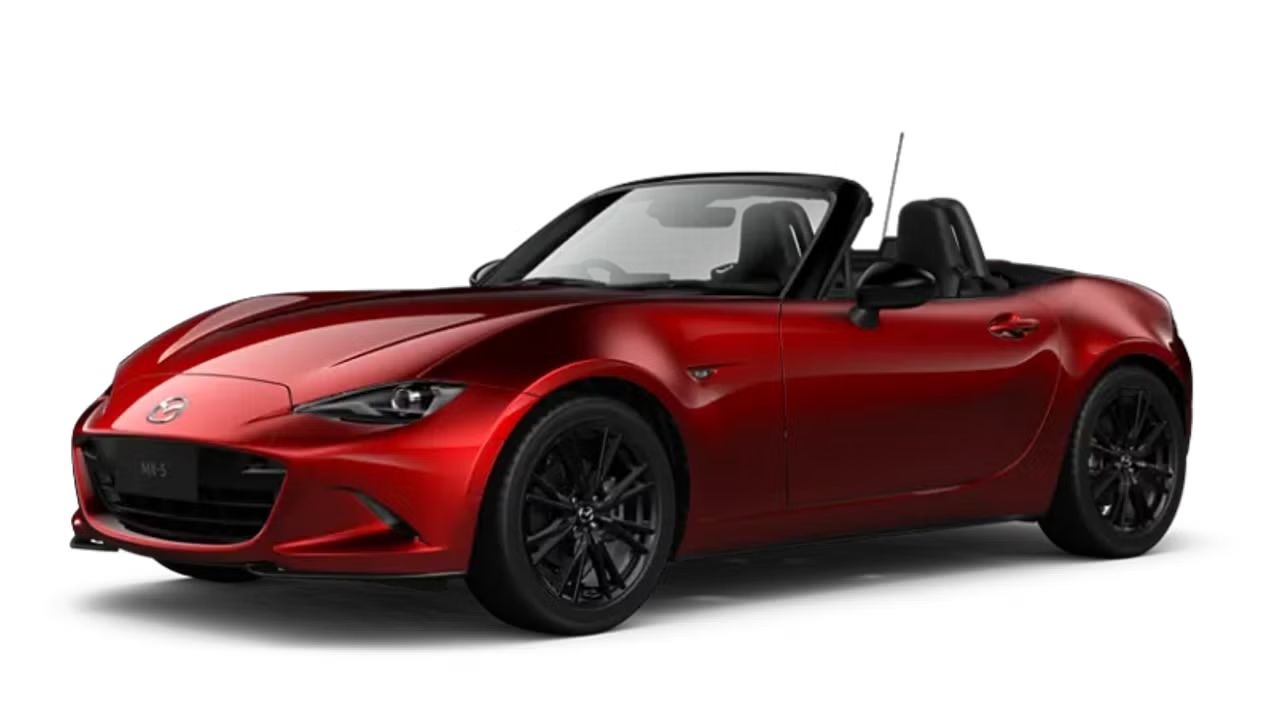
Some cars disappear because buyers panic. Others disappear because the right people were already waiting. The Mazda MX5 Miata sits in that second camp, where loyalty, timing, and low production meet in one small roadster. For American shoppers, the bigger point is simple: this was never a normal trim sitting quietly on a dealer lot. Mazda’s 35th Anniversary model was limited to 300 units in the United States, with Artisan Red Metallic paint, a beige soft top, tan Nappa leather, and serialized badging. That mix matters because Miata buyers notice details. They notice the wheel finish. They notice the roof color. They notice whether a badge feels earned or pasted on. A Miata special edition does not need giant horsepower to create heat. It needs the right story, the right look, and a short enough supply to make hesitation expensive. For readers tracking limited car drops, smart automotive market coverage helps explain why small enthusiast models can move faster than larger, louder performance cars.
Why Mazda MX5 Miata Demand Moved So Fast
Fast sellouts rarely begin on launch day. They start months earlier in owner forums, dealer call lists, weekend cars-and-coffee chatter, and small hints from the brand. The MX-5 has one of the rare buyer groups that treats minor changes like major news. A paint color, a numbered badge, or a tan interior can carry more weight than a bigger screen.
That sounds odd until you understand the car. The Miata is not bought like a crossover. People do not choose it because it has the most space or the highest seating position. They choose it because it feels honest. That emotional base makes a limited edition roadster easier to sell, because the buyer is often looking for meaning, not a bargain.
Why a Small Allocation Feels Larger Than the Spec Sheet
Three hundred cars across the United States is not much once you spread them across states, dealers, collectors, longtime owners, and shoppers who missed the last anniversary drop. A buyer in Texas may call three dealers. A buyer in California may hear every allocation is spoken for. A buyer in Ohio may need to place a deposit before seeing the car in person.
That is the strange part. A low-volume sports car can feel bigger online than it is in real life. Everyone sees the photos at once, but only a tiny group can get keys. Mazda confirmed the U.S. limit for the 35th Anniversary Edition at 300 units, which gives the model built-in scarcity before a single test drive happens.
The non-obvious lesson is that scarcity does not work on its own. Plenty of rare cars sit unsold when nobody cares. This one had a warm audience before the order books opened. The MX-5 crowd already knew what a Miata special edition meant because Mazda has been making them for decades, from British Racing Green cars to anniversary models with loud paint and numbered trim.
How Anniversary Trim Turns Interest Into Action
An anniversary model works because it gives a practical buyer emotional permission. A shopper who has been “thinking about getting one someday” suddenly has a reason to move now. That reason may be the color. It may be the badge. It may be the fear of missing the version that will not come back next year.
The 35th Anniversary Edition leans into that feeling without pretending to be a track monster. Mazda gave it Artisan Red Metallic paint, a beige soft top, bright 17-inch wheels, tan Nappa leather, tan carpeting, logo-embossed headrests, and a matching key fob sleeve. Those are not random decorations. They create a complete spec that looks chosen rather than assembled from a menu.
That matters in the U.S. market, where many buyers already see the Miata as a second car or weekend toy. A normal white or black roadster may be fun, but a 35th Anniversary Edition feels like an occasion. The car becomes easier to justify because it carries a date, a story, and a color people will remember.
What Makes This Miata Special Edition Different
The smartest thing about this model is that it does not try to fix what buyers already love. Mazda did not turn the roadster into a heavy grand tourer. It did not bury the character under fake aggression. It stayed close to the car’s old promise: light weight, open air, simple controls, and a driver who still matters.
That restraint is the point. The 35th Anniversary Edition feels desirable because it respects the base car. A limited edition roadster fails when the extras fight the machine underneath. Here, the upgrades are mostly visual and tactile, so the car still feels like the same small sports car that made people care in the first place.
Paint, Cabin Details, and the Collector Signal
Color carries more weight on a small roadster than people admit. On a large SUV, paint can disappear into the shape. On a Miata, the color is the whole mood. Artisan Red Metallic gives the anniversary car a mature look, closer to a fine watch dial than a loud toy.
The tan cabin is doing heavy work too. Black interiors are safe, but they can make a convertible feel closed in. Tan Nappa leather, tan mats, and a beige soft top push the car toward classic roadster territory. That is why the 35th Anniversary Edition feels less like a trim package and more like a finished idea.
Collectors also look for signs that a car will be easy to explain later. Serialized badging helps. A specific paint helps. A clear anniversary link helps. Nobody wants to spend ten minutes proving why a car is rare. The best limited cars tell the story before the hood is opened.
Why Low Weight Still Beats Bigger Horsepower
Here is the counterintuitive part: the Miata’s limited-run heat is not about power bragging rights. Mazda lists the current MX-5 with a 2.0-liter four-cylinder engine rated at 181 horsepower and 151 lb-ft of torque. In a world full of 500-horsepower headlines, that number looks modest on paper.
On the road, paper loses. A light sports car makes normal speeds feel alive. You can enjoy a clean shift, a corner, or a back-road rhythm without acting like you are qualifying for a race. That is why many owners defend the car so fiercely. It gives you access to fun at speeds that still belong on public roads.
Mazda also keeps pointing to balance as part of the experience. The current MX-5 page highlights near 50:50 weight distribution and a driver-focused cockpit. Those details are not brochure fluff for this car. They explain why a Miata special edition can excite people without changing the engine.
How U.S. Buyers Should Think Before Chasing One
A quick sellout can make people reckless. That is where buyers need to slow down, even if the car did not. Scarcity creates pressure, and pressure can make a bad deal look acceptable. A rare badge does not excuse a poor loan, a huge markup, or a dealer promise that never appears in writing.
The better play is to separate desire from panic. Wanting the car makes sense. Chasing it at any price does not. A limited edition roadster can be worth a premium to the right owner, but the math should still survive a quiet morning after the excitement fades.
Dealer Calls, Deposits, and Waitlist Discipline
The first step is boring, which means it matters. Ask the dealer whether the allocation is confirmed, whether the deposit is refundable, and whether the final selling price is written down. Do not rely on a friendly phone call when demand is hot. A short email can save a long argument.
American buyers should also call beyond their closest store. A shopper in Phoenix, Dallas, Atlanta, or Tampa may find that metro dealers already have long lists. A smaller dealer outside a major city may have less noise. That does not mean the car will be cheap. It means the conversation may be clearer.
The mistake is treating every “available” listing as real. Dealer websites can lag behind actual inventory. Some pages stay live after a car has been claimed. Before you book travel or send money, ask for the VIN, buyer’s order, deposit terms, and expected delivery window.
When a Regular Club or Grand Touring Makes More Sense
The regular MX-5 lineup still deserves attention. Mazda’s current U.S. page lists Sport, Club, and Grand Touring trims, with the Club adding items like sport-tuned Bilstein dampers and a Bose audio system, while Grand Touring brings comfort features such as heated leather-trimmed seats and automatic climate control.
That creates a fair question. Are you buying the anniversary story, or are you buying the drive? If the answer is the drive, a Club with the right package may make you happier. If the answer is the story, the 35th Anniversary Edition has a clear pull.
There is no shame in either answer. The wrong move is paying collector money for a car you plan to treat like a normal daily driver, then worrying about every rock chip. The regular car may give you more freedom. Freedom matters in a roadster.
The Resale Story Behind Limited Roadsters
Limited Miatas have history on their side, but history is not a blank check. Car and Driver’s special-edition history shows Mazda has sent many unique MX-5 variants to the U.S. over the model’s long run, including early green cars, M Editions, anniversary models, and other themed trims. That gives buyers a pattern to study instead of guessing.
The resale story usually comes down to three things: condition, documentation, and whether the edition has a strong identity. A rare car in rough shape is still a rough car. A clean car with papers, window sticker, service records, and original parts has a better chance of holding attention.
Why Rarity Helps Only When the Car Has the Right Story
Rarity is not magic. A limited car needs a reason people remember it. The 1991 British Racing Green car has a clear look. The 30th Anniversary model had bright Racing Orange. The 35th Anniversary Edition has Artisan Red, tan trim, and the anniversary marker. Those cues make it easy for future buyers to understand.
A vague appearance package ages poorly. A complete theme ages better. That is why the 35th Anniversary Edition has a stronger collector signal than a random color-and-wheel bundle. It connects to the car’s timeline.
Still, values move with taste. A future buyer may care more about manual transmissions, original paint, low mileage, or ownership records than the badge alone. The badge opens the door. The car’s condition keeps people in the room.
How to Protect Value Without Owning a Museum Piece
Some owners will store the car. That is fine, but it misses part of the Miata’s charm. This is a roadster built to move, not a sculpture that happens to have tires. The better balance is careful use: clean roads when possible, steady maintenance, indoor storage, and no odd modifications that future buyers need to undo.
Keep everything. Window sticker, manuals, delivery paperwork, service receipts, spare key sleeve, and any anniversary gifts should stay together. Small items become proof later. They also make the car feel complete when it changes hands.
For more buying context, read a used sports car buying guide before paying a premium. For ownership planning, compare insurance, tires, storage, and seasonal use through a convertible ownership costs checklist. A smart buy is still smart after the first weekend thrill wears off.
Conclusion
The rush around this anniversary roadster says less about hype and more about how rare honest sports cars have become. American buyers can find speed almost anywhere now, but lightness, feel, and a clean manual-roadster experience are harder to replace. That is why the Mazda MX5 Miata can still create urgency after so many years on sale. The 35th Anniversary Edition adds the right pieces: low U.S. volume, a rich color, a warm cabin, and a story owners can explain in one sentence. That does not mean every buyer should chase one at any price. It means the car earned the attention. The best move is simple: know why you want it, confirm every dealer promise in writing, and never confuse panic with passion. If this model slipped away, the lesson still helps. Buy the version you will drive, care for it well, and make the miles count.
Frequently Asked Questions
How many 35th Anniversary Edition MX-5 models came to the United States?
Mazda listed the U.S. run at 300 units, which makes it a low-supply anniversary model. That small number explains why many shoppers had to move through dealer lists, deposits, and allocation checks rather than normal showroom browsing.
Is the 35th Anniversary Edition faster than a regular MX-5?
The appeal is not based on a major power jump. The car keeps the MX-5’s light, balanced character while adding exclusive paint, trim, badging, and cabin details. Buyers are paying for rarity and presentation more than extra speed.
What color is the 35th Anniversary Edition?
Artisan Red Metallic is the signature exterior color. It is paired with a beige soft top, tan Nappa leather, tan carpeting, and anniversary details inside. The full color story is a major reason the model stands out.
Should I pay a dealer markup for a limited Miata?
A small premium may make sense for a collector-grade car with confirmed allocation and clean paperwork. A large markup needs caution. Compare the final price against a Club or Grand Touring and decide whether the anniversary story is worth the gap.
Is a regular MX-5 Club a better driver’s car?
For many drivers, yes. The Club trim offers a strong mix of handling equipment and everyday usability. The anniversary model is more collectible, but a regular Club may be easier to drive often without worrying about miles or paint chips.
Will the 35th Anniversary Edition hold its value?
It has good ingredients: low U.S. volume, clear anniversary branding, unique colors, and a loyal owner base. Long-term value still depends on condition, mileage, service records, originality, and whether future buyers keep caring about this specific edition.
What should I ask a dealer before placing a deposit?
Ask whether the allocation is confirmed, whether the deposit is refundable, what the written selling price is, and when delivery is expected. Request the VIN or allocation proof before sending money, especially if the dealer is outside your state.
Is the Miata still worth buying if I missed the anniversary model?
Yes. The regular MX-5 remains one of the clearest driver-focused cars sold in America. The anniversary trim adds collector appeal, but the core joy comes from the chassis, low weight, manual feel, and open-air driving.